IATI Strategic Plan 2026-2030
Reflecting a shared vision for better data, better decisions and better outcomes.
The International Aid Transparency Initiative (IATI) Strategic Plan 2026–2030 sets out a bold agenda to transform IATI from a data publishing platform into a driver of transparency, mutual accountability, and impact in international cooperation.
Adopted in a context of urgent global challenges, from off-track Sustainable Development Goals and a strained multilateral system, to widening financing gaps and a climate emergency, this strategy responds with renewed ambition and focus.
Two Core Outcomes by 2030
IATI will contribute to achieving the two key outcomes.
1) Enhanced Data Use. Enhanced Data Use means that all stakeholders systematically use development cooperation data, leading to greater transparency, mutual accountability and better decisions at local, national and global levels.
2) More Accountable and Effective International Cooperation. More Accountable and Effective Cooperation means an open, trusted and comprehensive evidence base informing international cooperation, so that resources are better aligned with needs and results.
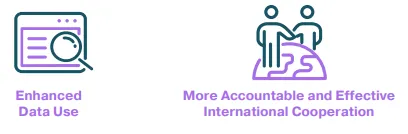
Together, these outcomes embody IATI’s vision of a world where transparent data empowers stakeholders to deliver better outcomes for the people and the planet.
Four Integrated Action Areas
Four integrated Action Areas will drive progress toward these outcomes.
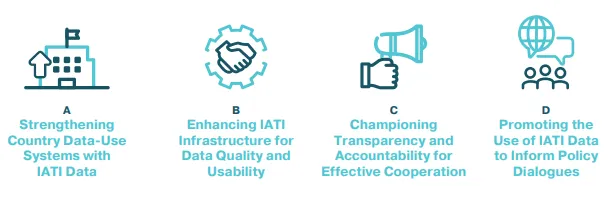
- Action Area A: Strengthening Country Data-Use Systems with IATI Data. Embedding IATI data in country-level systems and processes to support mutual accountability and better coordination at the national level.
- Action Area B: Enhancing IATI Infrastructure for Data Quality and Usability. Transforming and expanding IATI’s technical infrastructure and Standard to ensure data is easy to publish, of high quality, and interoperable across the development data ecosystem.
- Action Area C: Championing Transparency and Accountability for Effective Cooperation. Re-energising the global commitment to transparent, accountable development cooperation through advocacy, partnerships, and expanded membership, positioning IATI as a central pillar of the international cooperation architecture.
- Area D: Promoting the Use of IATI Data to Inform Policy Dialogues. Bridging the gap between data and policy by actively curating and translating IATI data into insights, products, and engagements that inform decision-making at global, regional, and national levels.
These priority areas reinforce one another, collectively turning open data into actionable evidence and greater development effectiveness.
Endorsed by IATI’s diverse membership
IATI members unanimously endorsed the five-year Strategic Plan for the initiative at the 2025 Members’ Assembly. The strategy signals a new phase where IATI will not only enable more and better data to be published, but better support stakeholders in using that data to drive more effective, accountable international cooperation.
As a recognised pillar of the global transparency and financing architecture, IATI will work with governments, civil society, multilateral agencies, and others to rebuild trust and deliver on the promise of the 2030 Agenda in an open, inclusive way.
Together with the IATI Integrated Results and Resources Framework (Annex I), and the IATI Theory of Change and Value Proposition (Annex II) this Strategic Plan charts a clear course for IATI to make transparency work for people and the planet until 2030.
IATI Strategic Plan 2026 - 2030
-
IATI Strategic Plan 2026 - 2030
(PDF 8.2 MB) -
IATI Strategic Plan 2026 - 2030 Annex I
(PDF 225.6 KB) -
IATI Strategic Plan 2026 - 2030 Annex II
(PDF 327.3 KB) -
IATI Strategic Plan 2026 - 2030 ES
(PDF 8.8 MB) -
IATI Strategic Plan Report Annex I ES
(PDF 348.6 KB) -
IATI Strategic Plan Report Annex II ES
(PDF 431.1 KB) -
IATI Strategic Plan 2026 - 2030 FR
(PDF 8.1 MB) -
IATI Strategic Plan Report Annex I FR
(PDF 348.7 KB) -
IATI Strategic Plan Report Annex II FR
(PDF 342.3 KB)
Informed by a global consultation
The IATI Strategic Plan 2026–2030 was informed by a year-long global consultation process with IATI members and wider community of development and humanitarian stakeholders. ensuring the strategy reflects real needs and priorities across the international system.